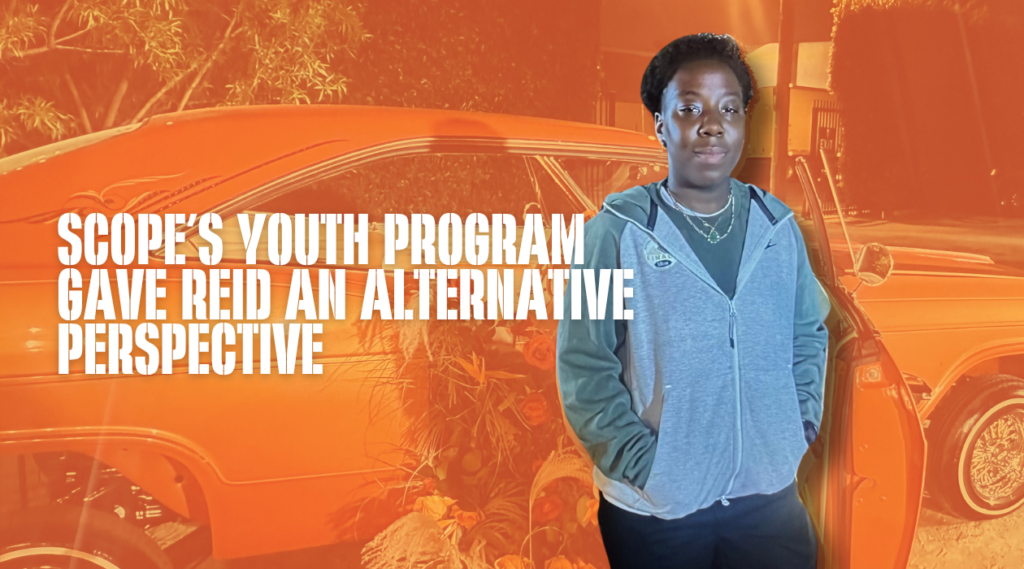
In 2024, Reid graduated from Shaw University in North Carolina with a degree in athletic training. They had a plan. Athletic training was their passion and what they saw themselves in. Then, after shadowing trainers in the field, the plan started to shift into another direction.
“I don’t think I want that,” they said of the career they had spent four years preparing for. The hours were long, the pay didn’t match the work, and the future they’d pictured for themselves no longer looked like something they wanted to walk into. Reid shifted their sights toward another career path but the more immediate question was what to do with the time in between. That’s when their dad told them about Strategic Concepts in Organizing and Policy Education’s (SCOPE) Youth Program.
A History Lesson That Changed How They Saw Their Own Neighborhood
Reid grew up in Inglewood. They had lived there their whole life. But it wasn’t until they sat in on lessons led by Youth Organizer, Brian Jointer (BJ), that they began to discover a deeper layer of their home’s history.

“I remember he [BJ] talked about how LA built a lot of our freeways through Black and Brown neighborhoods,” Reid recalls, “and that is why it isn’t the same as it was in the 50s and 60s.” Neighborhoods like South LA, Boyle Heights, and Compton, they learned, were once predominantly white. As Black and Hispanic families moved in, the city stopped investing in those communities the way it once had.
It’s the kind of history that doesn’t usually make it into a classroom, and Reid says that gap in their own knowledge is one of the clearest things the Youth program filled. “I think just the education about LA — I didn’t even know a lot of what I was in, like where I grew up,” they say. “Knowing the history of it makes it a bit sadder, but I am glad I found a community there in a way.”
That education didn’t stay confined to the political education workshops. When the Youth Program wasn’t in the workshops, the group showed up to protests — including one focused on rent control. Reid, who still lived at home, hadn’t fully understood the stakes before standing in that crowd. “People who couldn’t afford rent — it was getting raised like $100 every year, and they couldn’t even afford to stay in the place that they were staying,” they said. “But if they got kicked out, it would essentially be added to the homeless population, who is also not being helped.” What started as an outing became, in their words, “actually very informative” — a firsthand look at a policy fight they had only ever heard about secondhand.
Carrying It Into the Field
The lessons showed up sooner than they had expected. Alongside the Youth Program, Reid also completed a five-month EMT program — one that, they say, felt within reach specifically because of the momentum they had built. It covered housing, provided a stipend, and helped with transportation. “I feel like it would actually help me versus going to a community college where you are pretty much on your own,” they shared.
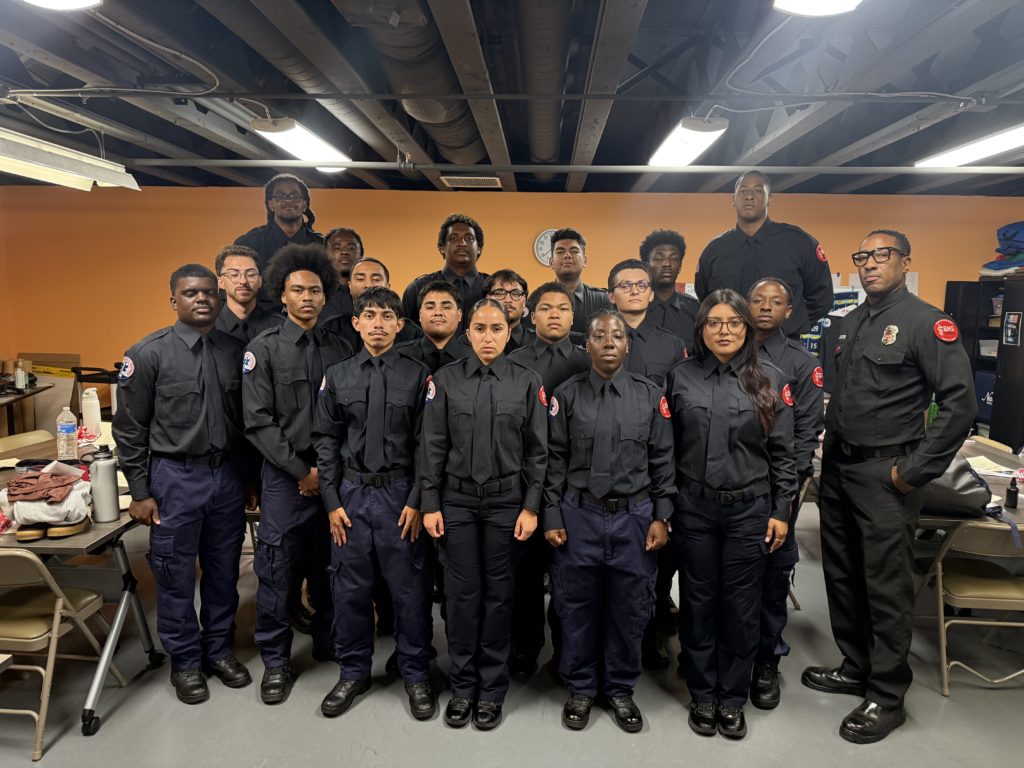
But it was on a ride-along with an ambulance service that the lessons from the Youth Program came into a sharper focus. Reid and the crew picked up a houseless woman who was belligerent and difficult. The firefighters and police officers on scene responded by mocking her.
Reid didn’t. “I would say that I was the different side of that, and actually speak to her,” they said. “It doesn’t matter what she looks like — she called us for help.”
It’s a small moment, but it’s the clearest evidence of what the Youth program set out to do. The same instinct that had Reid listening closely to BJ’s history lessons and standing in a crowd at a rent control protest was the instinct that showed up, months later, on the back of an ambulance — treating a stranger like a person first.
What They’d Tell Someone Who Feels Stuck
For young people wondering where to start, Reid’s answer is simple: get involved, in whatever form that takes. “I think it is a great opportunity to get involved in our community,” they say, “like in any way — from a peaceful protest, or signing up [for community events], or just those lessons with BJ.”
About SCOPE’s Youth Program
SCOPE’s Youth Program prepares young adults ages 18–25 in South Los Angeles to become community leaders and organizers through hands-on experience and alternative education. Rooted in economic justice, political consciousness, and community engagement, the program builds practical career skills while developing participants into active organizers and members of SCOPE’s base. Through a structured three-part pathway, participants gain real-world work experience and a deeper understanding of how organizing and policy campaigns drive social change.
Interested in joining? Reach out to SCOPE’s Youth Organizer, Brian Jointer, at bjointer@scopela.org.